|
Medieval
Knights
Knights
After
the lord on the social ladder came the knight. The path to
knighthood began at the age of seven, when a vassal sent his
son to the lord's house to become a page. For seven years
a page was cared for by the women of the house, who instructed
him in comportment, courtesy, cleanliness, and religion.At
14 the page became a squire, a personal attendant to a knight.
From the knight he learned riding and all the skills of war,
as well as hunting, hawking, and other sports.
The
Knightly Code. When he was judged ready (generally between
the ages of 18 and 21) the squire was knighted in a religious
ceremony after spending the night guarding his armour before
a church altar. He had to swear to the knightly code which
asked him to "protect the weak, defenseless, and helpless,
and fight for the general welfare of all." This code
was rarely lived up to, but it remained the standard for chivalry
and proper behaviour amongst the nobility for centuries. In
theory the squire could be knighted on the battlefield for
exceptional valour, but this event was much rarer than Hollywood
would have us believe.
A
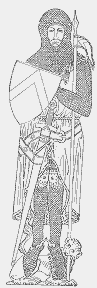
13th century knight
Fighting. Battles were usually small affairs, fought between
the knights of individual lords. The object in a fight wasn't
necessarily to kill an opponent, but to capture and ransom
him. Your foe was worth more to you alive than dead.
Tournaments.
Imported from France in the 12th century, tournaments were
an essential part of military and social life. These "war
games" consisted of individual contests (jousts), and
group combat. Lances and swords were blunted, but tournaments
were a place where reputations were made, so the fighting
was hard and dangerous. Prizes were given to the winners,
and some knights, such as the famous William Marshall, made
their fortunes on the tournament circuit, much as a modern
rodeo rider might in the American West.
The
armour worn in tourneys was different from regular battle
gear. It was very heavy and padded inside. It was also extremely
cumbersome.
The
object of the tourney was simply to unhorse your opponent,
though often the fighting was so fierce that men were killed.
Challengers erected tents at one end of the ground and hung
a shield outside. A knight accepting the challenge rode up
and touched his lance to the shield. The winner of the jousts
was awarded a prize by the Queen of Beauty, elected for the
occasion from amongst the women present.
By the 14th century tournaments became rousing fairs complete
with singing, dancing, and feasting which might last for several
days.
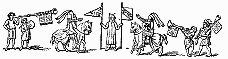
Opening a joust, 14th century
|