|
The wearing of medieval armor
was an effective means of protection
in war and combat for centuries. The object of medieval armour
was to protect the wearer from attack from the most powerful
weapons of the period. The importance of the craft of medieval
armor manufacture in the Middle Ages can hardly be underestimated.
Armor use dates back to the Greek and early Roman empire.
Medieval era knights are most remembered for their elaborate
armor. A knight's armor was more that protection, it reflected
his status and lifestyle. The quality of the armor was as
important and the overall look and the battle efficiency.Indeed
it was also fashion statement.
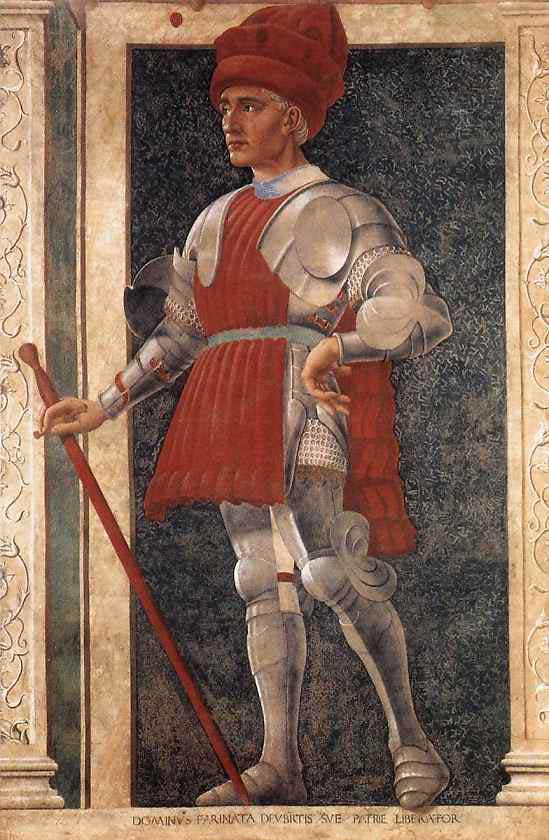 All
our armor is hand-made by artisans and craftsmen and is fully
articulated with the finest detail. They all ship complete
as shown in the pictures including stands if shown. Throughout
the centuries, Italian armor was highly prized for incredible
detailing and superior style! Our superb reproduction armor
is crafted in the styling tradition of those master craftsman
who created the originals for Kings and Knights throughout
Europe. Consider our Italian made full suits of armor if you
want to make a real statement in a entrance way or foyer.
Nothing is more impressive than a full suit of knights medieval
armour guarding the entrance of your castle, home or business.
All
our armor is hand-made by artisans and craftsmen and is fully
articulated with the finest detail. They all ship complete
as shown in the pictures including stands if shown. Throughout
the centuries, Italian armor was highly prized for incredible
detailing and superior style! Our superb reproduction armor
is crafted in the styling tradition of those master craftsman
who created the originals for Kings and Knights throughout
Europe. Consider our Italian made full suits of armor if you
want to make a real statement in a entrance way or foyer.
Nothing is more impressive than a full suit of knights medieval
armour guarding the entrance of your castle, home or business.
Protecting
oneself in battle has always been a concern for any soldier,
and medieval knights were no exception. In fact, it was their
protective armor that helped define them as a military unit
and social class. Armoring oneself during the Middle Ages
was a great expense that only the wealthy could afford.
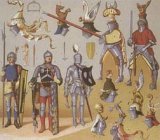 Among
the earliest metallic armor to be worn by medieval knights
was chainmail armor, consisting of tens of thousands of interlocking
rings woven painstakingly by hand to form a shirt, coif, or
leggings. Because of the mild steel produced in medieval times
each ring had to be riveted to keep all the rings from spreading
and opening under the weight of the piece. Underneath the
metal armor the knight would wear a padded garment known variously
as an "aketon", or "gambeson". To this
defensive equipment he added a shield, usually made of leather-covered
wood, and a helmet. As the medieval arms race progressed and
new, more powerful weapons were developed (such as the longbow
and crossbow), chainmail became ineffective on its own.
Among
the earliest metallic armor to be worn by medieval knights
was chainmail armor, consisting of tens of thousands of interlocking
rings woven painstakingly by hand to form a shirt, coif, or
leggings. Because of the mild steel produced in medieval times
each ring had to be riveted to keep all the rings from spreading
and opening under the weight of the piece. Underneath the
metal armor the knight would wear a padded garment known variously
as an "aketon", or "gambeson". To this
defensive equipment he added a shield, usually made of leather-covered
wood, and a helmet. As the medieval arms race progressed and
new, more powerful weapons were developed (such as the longbow
and crossbow), chainmail became ineffective on its own.
Late
in the Middle Ages plate armor began to appear (ca. late 13th/early
14th century), first as reinforcements to vital areas such
as the chest and shoulders, and finally as a complete suit
(ca. early 15th century). The medieval "knight in shining
armor" that most people think of when the subject of
knights comes up, is the fully plate-armored knight. Chainmail
armor was now relegated to protecting smaller vital areas
that could not be covered with plate armor, such as the groin
and under the arms. The shield became smaller, or disappeared
altogether as it became unnecessary and redundant
A
fully plate-armored knight
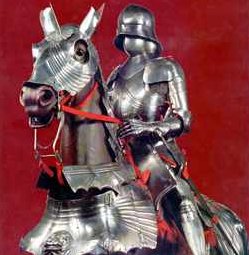 Ironically
it was soon after the development of the full suit of plate
armor that the medieval knight's advantage in battle began
to wane. With the effective use of gunpowder weapons (ca.
15th/16th century) not even plate armor could protect the
knight, and the cumbersome armor gradually became ineffective
and impractical.
Ironically
it was soon after the development of the full suit of plate
armor that the medieval knight's advantage in battle began
to wane. With the effective use of gunpowder weapons (ca.
15th/16th century) not even plate armor could protect the
knight, and the cumbersome armor gradually became ineffective
and impractical.
|
